domingo, 5 de maio de 2013

Handbook of Mobile Learning
This handbook provides a comprehensive compendium of research in all aspects of mobile learning, one of the most significant ongoing global developments in the entire field of education. Rather than focus on specific technologies, expert authors discuss how best to utilize technology in the service of improving teaching and learning. Read more here...

domingo, 14 de abril de 2013

sábado, 13 de abril de 2013

domingo, 7 de abril de 2013
Gamification Portugal
Gamificação para aumentar a produtividade
Aumentar a produtividade dos seus colaboradores é uma preocupação e uma prioridade para todas as empresas. E, hoje em dia, algumas delas já estão a usar gamificação para o conseguir. Agora que as redes sociais já fazem parte da realidade de muitas empresas é a vez da gamificação entrar nessa área. Mais aqui ...
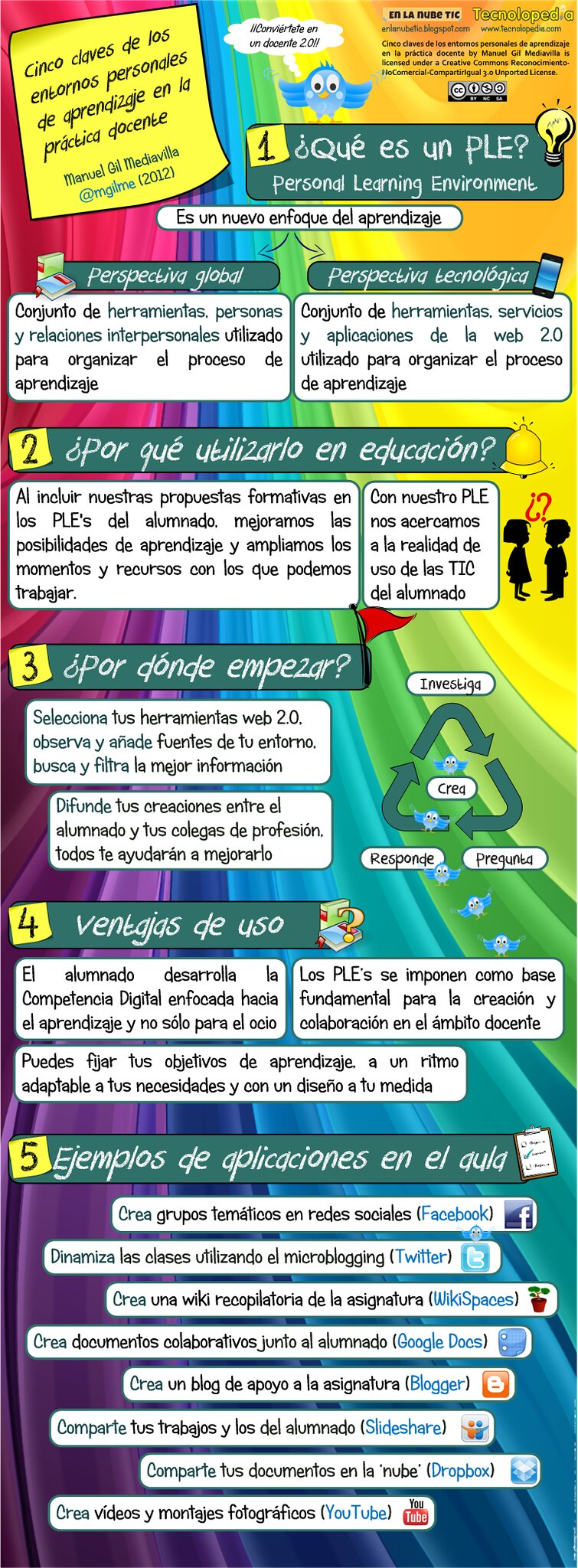
Cinco claves de los entornos personales de aprendizaje (PLE's) aplicados a la docencia
Cinco claves de los entornos personales de aprendizaje (PLE's) aplicados a la docencia
Manuel Gil Mediavilla (2012)

quinta-feira, 4 de abril de 2013
terça-feira, 2 de abril de 2013
Tecnologias emergentes
O relatório Horizon Report de 2012 apresenta algumas tendências para os próximos cinco anos. Ler mais aqui.
sábado, 30 de março de 2013
Connecting Classrooms - Sustainability: Maintaining the Momentum
Um projeto colaborativo para a Inclusão e o Voluntariado. Ser um entre iguais. 
100+ Google Truques para professores

É o mundo do Google..
Agora, podemos usá-lo de maneira mais fácil, então por que não aproveitar o vasto mundo que o Google tem para oferecer ?
sexta-feira, 29 de março de 2013
Online etiquette references
1. Boehlefeld, S. P. (1996). Doing the right thing: Ethical cyberspace research. The Information Society, 12, 141-152.
2. Dzeyk, W. (2001). Ethische Dimensionen der Online-Forschung [Ethical dimensions of online research]. Kölner Psychologische Studien, 6(1), 1-30. Online available at: http://kups.ub.uni-koeln.de/24
2. Ess, C. (2007). Internet research ethics. In A. N. Joinson, K. Y. A. McKenna, T. Postmes & U.-D. Reips (Eds.), The Oxford handbook of Internet psychology (pp. 487-502). Oxford, UK: Oxford University Press.
3. Eysenbach, G. and Till, J. (2001). Information in practice. Ethical issues in qualitative research on internet communities. BMJ (British Medical Journal) 2001; 323(10 November), 1103-1105. Available online: <http://bmj.bmjjournals.com/cg
4. Olivero, N. & Lunt, P. (2004). When the ethic is functional to the method: The case of e-mail qualitative interviews. In Buchanan (Ed.), Readings in Virtual Research Ethics: Issues and Controversies. Hershey, PA: Information Science Pub.
5. Peden, B. F., & Flashinski, D. P. (2004). Virtual Research Ethics: A Content Analysis of Surveys and Experiments Online. In E. Buchanan (Ed.), Readings in Virtual Research Ethics: Issues and Controversies. Hershey, PA: Information Science Pub. http://www.idea-group.com/down
6. Reips, U.-D. (1999). Online research with children. In U.-D. Reips, B. Batinic, W. Bandilla, M. Bosnjak, L. Gräf, K. Moser, & A. Werner (Eds.), Current Internet science - trends, techniques, results. Zürich: Online Press. [WWW document]. Available URL: http://gor.de/gor99/tband99/pd
2. Dzeyk, W. (2001). Ethische Dimensionen der Online-Forschung [Ethical dimensions of online research]. Kölner Psychologische Studien, 6(1), 1-30. Online available at: http://kups.ub.uni-koeln.de/24
2. Ess, C. (2007). Internet research ethics. In A. N. Joinson, K. Y. A. McKenna, T. Postmes & U.-D. Reips (Eds.), The Oxford handbook of Internet psychology (pp. 487-502). Oxford, UK: Oxford University Press.
3. Eysenbach, G. and Till, J. (2001). Information in practice. Ethical issues in qualitative research on internet communities. BMJ (British Medical Journal) 2001; 323(10 November), 1103-1105. Available online: <http://bmj.bmjjournals.com/cg
4. Olivero, N. & Lunt, P. (2004). When the ethic is functional to the method: The case of e-mail qualitative interviews. In Buchanan (Ed.), Readings in Virtual Research Ethics: Issues and Controversies. Hershey, PA: Information Science Pub.
5. Peden, B. F., & Flashinski, D. P. (2004). Virtual Research Ethics: A Content Analysis of Surveys and Experiments Online. In E. Buchanan (Ed.), Readings in Virtual Research Ethics: Issues and Controversies. Hershey, PA: Information Science Pub. http://www.idea-group.com/down
6. Reips, U.-D. (1999). Online research with children. In U.-D. Reips, B. Batinic, W. Bandilla, M. Bosnjak, L. Gräf, K. Moser, & A. Werner (Eds.), Current Internet science - trends, techniques, results. Zürich: Online Press. [WWW document]. Available URL: http://gor.de/gor99/tband99/pd
Apropriação do telemóvel como ferramenta de mediação em mobile learning : estudos de caso em contexto educativo
 Os dispositivos móveis - Telemóvel, PDA, Pocket PC, Tablet PC – têm vindo a ser usados como ferramentas de aprendizagem em mobile learning. A emergência de novos cenários educativos levou-nos a tentar compreender os desafios e oportunidades da integração de dispositivos móveis, como o telemóvel, no processo de ensino e aprendizagem. Propõe-se um referencial teórico com base nas abordagens Construtivistas, na Teoria da Actividade e no Modelo ARCS, que esteve subjacente ao estudo desenvolvido. O estudo analisou como os alunos se apropriaram do telemóvel como ferramenta de aprendizagem, avaliou o telemóvel como ferramenta de mediação em actividades de aprendizagem e analisou as potencialidades e limitações da sua integração no processo de ensino e aprendizagem. Para a consecução destes objectivos criámos um conjunto variado de actividades curriculares mediadas pelos telemóveis dos alunos e desenvolvidas nas disciplinas de Português e Francês. A investigação realizada é qualitativa com opção metodológica pelo estudo de casos múltiplos (quatro), mas com apenas uma unidade de análise. Participaram sessenta e oito alunos do ensino secundário geral e profissional, diurno e nocturno, de duas escolas urbanas, uma pública e outra semi-privada. Trata-se de um estudo exploratório, em virtude da escassez de estudos na área, por se tratar da integração de uma nova tecnologia no ensino. As técnicas de recolha de dados utilizadas foram o inquérito e a observação. Desenvolvemos e validámos quatro questionários e dois guiões, um para entrevistas individuais e outro para focus group. O questionário I teve como objectivo caracterizar os participantes, o questionário II conhecer a reacção ao uso de podcasts para revisão de conteúdos e aperfeiçoamento da leitura e pronúncia em língua francesa, o questionário III analisar a reacção às actividades por SMS e o questionário IV estudar a opinião sobre o uso do telemóvel como ferramenta de aprendizagem dentro e fora da sala de aula. As entrevistas individuais permitiram recolher reacções dos participantes à utilização do telemóvel como ferramenta de aprendizagem e compreender a interacção e comunicação estabelecida durante o desenvolvimento do estudo. O focus group possibilitou recolher informações complementares do uso do telemóvel como ferramenta de mediação. A análise dos dados obtidos permitiu concluir que apesar da novidade da integração de dispositivos móveis como ferramentas de apoio às actividades de aprendizagem, os alunos aceitaram usar os seus próprios telemóveis, que incorporaram naturalmente nas suas práticas de estudo, explorando as várias funcionalidades através de diferentes actividades curriculares, realizadas dentro e fora da sala de aula, de forma individual e colaborativa. O telemóvel usado como ferramenta mediadora de aprendizagem possibilitou tirar dúvidas e aprender quando era mais conveniente, permitiu um contacto permanente com os conteúdos curriculares, aumentar a motivação do aluno pela disciplina e o aperfeiçoamento da leitura em língua estrangeira. Os dados revelaram ainda grande satisfação dos alunos pelas tarefas realizadas, que tornaram o processo de ensino e aprendizagem mais atractivo, e o reconhecimento do potencial educacional do telemóvel para apoio ao estudo. Este estudo constitui um contributo para a integração de dispositivos móveis na educação e alerta para as novas oportunidades de aprendizagem proporcionadas por mobile learning.

Subscrever:
Comentários (Atom)